Monday, November 22, 2021

2111 Laguna Powerjet | Laguna Maxflo Pond Filter pumps | Creative Pumps

Laguna Powerjet | Laguna Maxflo Pond Filter pumps | Creative Pumps

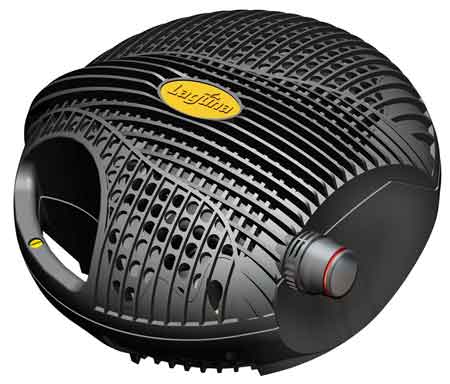
Laguna Max-Flo Filter & Waterfall Pump

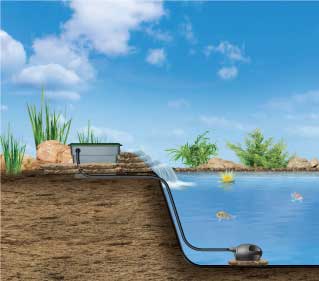
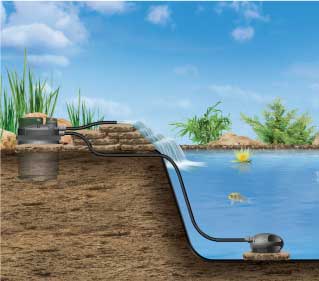
The Laguna Maxflo pumps are ideal for pressure and gravity pond filters. Koi fish and turtle waste is handled with ease. Comes complete with a three year Australia Wide warranty. Good bi-level suction from above and below and a large surface area ensures good water movement without clogging.

The Laguna Max-Flo range are by far our most popular selling pump for pumping to external filters such as pressure filters or gravity filters. Very well priced for the high build quality and reliability. They keep going year after year and use minimal power. Also very popular for use with waterfalls and spillways due to the low running costs and buy price.

  • 3 year warranty - Including impeller
  • Vortex impeller design for solids
  • Ceramic shaft - suitable for salt water
  • Rated for 24/7 continuous use
  • Incredibly low power use
  • Fantastic value for money. Reliability has been superb
  • Thermal overload shut off protection in-built
  • Can handle large solids up to 10mm depending on the model
  • 10m cable on all models makes it plug and play, no electricion required. Hint: do not cut the plug to install, it will almost certainly void your warranty - as with most pond pumps
  • Made in Italy
  • Simple Pond Kits are available which include a pump, matching filter, pond hose and fittings - click here
  • Replacement impellers and spare parts available - click here

Aussie's Observations about  Max-Flo Filter & Waterfall Pump 

Budget • Good • Better • Best • SUPERIOR

External filters, waterfalls, streams, water features.

The 3 year warranty on both pump and impeller. Very low running costs due to low wattage. An excellent pump for filters such as Oase or Laguna. Unique ‘Click Fit’ fastenings for easy connection. Anti-leaf ribs to assure continued suction.

Nothing!

ProductPriceMax Flow L/HourMax Head HeightDimensionsPower UsagePower SupplyWarrantyBSP Thread on Inlet (suction)BSP Thread on Outlet (delivery)Dry Installation (In-Line)Flow Adjustment on PumpHose Tail(s) provided with pumpMade InMax Coarse Debris SizeOptional Foam Block FilterPower Cord LengthRated for 24/7 Continuous UseRemovable Pre-FilterSuitable for salt water
Laguna Max-Flo 2200Filter & Waterfall Pump
$231.00 Not available
22001.8D 210 x H 130mm322403 YearsN/AN/ANoNo20/25/32mmItaly6No10YesNoYes
Laguna Max-Flo 4000Filter & Waterfall Pump
$249.00 
40002D 210 x H 130mm552403 YearsN/AN/ANoNo20/25/32mmItaly6No10YesNoYes
Laguna Max-Flo 5000Filter & Waterfall Pump
$346.00 
50003.3D 210 x H 130mm652403 YearsN/AN/ANoNo20/25/32mmItaly6No10YesNoYes
Laguna Max-Flo 7600Filter & Waterfall Pump
$399.00 
76003.5D 250 x H 150mm752403 YearsN/AN/ANoNo25/32/38mmItaly8No10YesNoYes
Laguna Max-Flo 9000Filter & Waterfall Pump
$449.00 
90003.7D 250 x H 150mm1002403 YearsN/AN/ANoNo25/32/38mmItaly8No10YesNoYes
Laguna Max-Flo 11000Filter & Waterfall Pump
$476.00 
106004.5D 250 x H 150mm1252403 YearsN/AN/ANoNo25/32/38mmItaly8No10YesNoYes
Laguna Max-Flo 16500Filter & Waterfall Pump
$568.00 
165004.7D 250 x H 150mm1602403 YearsN/AN/ANoNo32/42mm*
42mm = 1 5/8 inches
Italy10No10YesNoYes

Flow rates at different pumping heights - litres per hour

Model@ 0m@ 0.6m@ 0.9m@ 1.5m@ 2.1m@ 2.7m@ 3.0m@ 3.7m@ 4.0m@ 4.3mHead / Shut Off**
22002,2001,6401,330520------1.8m
40004,0003,0002,5001,300------2.0m
50005,0004,6804,1403,4202,8001,950780---3.3m
75007,6007,0506,7005,9004,9004,0003,1500--3.5m
90009,0008,3007,9006,8005,9004,8003,8000--3.7m
1100010,60010,2009,8509,1208,1007,0206,8005,1004,3202,8004.5m
1600016,00015,00013,44011,78010,0807,9207,2005,2804,3202,8804.5m

**Head / shut off - The higher the water is pumped, the less the flow until the maximum pumping height is reached. It is critical that this is understood, this height is where the water stops flowing.

Wednesday, November 17, 2021

Forest Garden With 500 Edible Plants Requires Only a Few Hours of Work Per Month

Forest Garden With 500 Edible Plants Requires Only a Few Hours of Work Per Month


Forest Garden With 500 Edible Plants Requires Only a Few Hours of Work Per Month
OCTOBER 12, 2020 AT 5:12 PM

This man’s forest garden produces tons of food, while practically tending itself!


Historically, farms and forests have been at odds. Conventional wisdom says we have to cut down the forest to make way for agriculture.

But a growing movement called agro-forestry “capitalizes” on the free services forests provide farmers and gardeners.


Not only do trees protect more delicate edible plants from the elements and extreme weather, they provide nutrients, water, pest control and pollination services.

Although you might not find all your traditional annual veggies in a forest garden, you will discover hundreds of new varieties of edible plants you never knew existed, that are often more nutrient-dense and flavorful.

And if you choose your plants carefully, they will propagate themselves each year and live symbiotically among the hundreds of diverse species around them, requiring no tilling, planting, fertilizing, weeding or watering.

This is what Martin Crawford has done in his 2-acre forest garden in England for over 20 years — let it do the work for him for the most part, after a few years of research and legwork.


While the initial planting of the forest required years of research and watering, Crawford now has over 500 varieties of food growing wild in his garden, which requires very little work other than plucking and eating the fruits of his “labor.”

From time to time, he adds a new exotic species to his garden or stomps on some overgrown cow parsley to give other herbs a chance to catch up, but for the most part, he’s “playing and tinkering” in his garden, rather than doing anything that resembles work.

In his book Creating a Forest Garden, he describes how a complete garden should include 7 layers:

1. Tall trees

2. Smaller trees

3. Shrubs

4. Perrenials

5. Groundcover

6. Root crops

7. Climbing vines

It includes directly useful plants like fruit trees, nuts, tubers, vegetables, medicinal herbs, timber. It also includes indirectly useful plants that help the system function better like nitrogen fixers, mineral accumulators, plants that attract beneficial insects that eat pests.

Because almost all of the plants are perennial, there’s no need to “dig the soil.”

“Not digging the soil is really important in terms of sustainability because every time you dig the soil, a load of carbon goes into the air,” Martin says in the video below:


Additionally, digging or tilling the soil to plant annual crops, releases nutrients, and kills bacteria, fungi and other microorganisms that keep the soil alive by exposing them to the sun.

The soil in a forest garden is extra rich because the deep tree roots breakdown minerals deep in the subsoil and bring the nutrients up to the topsoil. They also drop leaves, which act as a natural compost.

Also, the canopy layer of the trees keeps moisture from evaporating out of the garden, so that as your forest grows denser you will have to do less and less watering. When forests grow big enough, they create their own rainfall, eliminating the need for irrigation altogether.

And… Crawford notes, the forest attracts wild game, so if you’re into meat, you don’t have to raise it, you can just shoot it.

So, in short, don’t clear the forest to start a farm, let the forest grow your food for you.

For a more in depth tour of Crawford’s garden, check out this longer video and buy one of his books:


RELATED: How to Grow a 100-Year-Old Forest in Your Backyard in Just 10 Years

RELATED: Why Permaculture is the Future of Food if There is a Future of Food

Friday, August 27, 2021

What will our eco-friendly homes of the future look like? | Environment | The Guardian

What will our eco-friendly homes of the future look like? | Environment | The Guardian:

What will our eco-friendly homes of the future look like?

The planet-saving innovations available, and which are most likely to be used in UK houses

A house made from hemp may not be your bag, but it is possible.
A house made from hemp may not be your bag, but it is possible. Photograph: Practice Architecture/Oskar Proctor

As we argue over heat pumps and electric car charging sockets here in the UK, it is undeniable that most of our homes have a long way to go to be eco-friendly.

To reach net zero, we are going to have to change how we heat our houses. The way they are built will probably have to change, too. Perhaps the ubiquitous squat brick suburban house will become a thing of the past. Hopefully so will our Victorian pipe system and, for those of us who rent, our ancient boilers which make a disturbing noise.

We spoke to experts at the Centre for Alternative Technology (CAT) to find out what the eco-friendly house of the future could look like.

An Earthship home in New Mexico.
An Earthship home in New Mexico. Photograph: Ricardo DeAratanha/Los Angeles Times/Getty Images

Design for the sun

If you’re lucky enough to be able to start from scratch, you can immediately make proper use of the sun by orienting your house to make the most of both light and heat. The futuristic Earthship homes built by Michael Reynolds in New Mexico in the 1970s were built at an angle to the sun which would maximise solar gain – collecting warmth in an atrium at the front, with the thick thermal mass of the walls then regulating the temperature inside. Using the sun for free light and heat means you will also have to think about shade as part of the design.

The house should be built to efficient standards, too. The CAT recommends houses are built or retrofitted to AECB or Passivhaus standard. This essentially means the house will have maximum insulation to keep energy demands down.

Materials

In a perfect world, homes could be built from natural products which sequester carbon from the air as they grow, such as hemp, wood fibre, straw and other grasses. A particularly stylish example of a house made from hemp can be found in Cambridgeshire, where the architects who designed it boast that it is made from the plant which grows around it. The home, called Flat House on Margent farm, is constructed from timber, which is filled with a mulch of hemp.

But if you don’t fancy that, another excellent possibility is using recycled materials – brick, stone, glass. Unfired earth bricks – which are left to dry naturally rather than heated in an oven – are increasingly being used. Pretty much anything is better than concrete, which is one of the most carbon-intensive materials on the planet.

Nature enthusiasts and climate campaigners in European cities have also been lobbying for their local authorities to allow for “green roofs” on buildings, which both help with insulation and can improve biodiversity. In the UK you don’t need planning permission to do this, but it’s best to work with an experienced builder to make sure your roof is suitable.

A heat pump.
A heat pump. Photograph: Octopus Energy/PA

Heating and energy

How we power and heat our homes is usually one of the biggest contributors to the household’s carbon footprint. If appropriate for the needs of the house, CAT suggests solar water heating for hot water, especially for larger households (for example, three or four people washing daily).

Heat pumps, which take heat from the ground or air outside, are a low-carbon way to heat a home. The government is currently proposing a target of 600,000 heat pumps to be installed annually by 2028. Should you replace a well-functioning boiler immediately? If your sole priority is saving carbon emissions, then Jan Rosenow of the Regulatory Assistance Project crunched the numbers and came up with the answer yes: the savings by a heat pump outweigh the embodied carbon emissions of making it. However, the pumps are extremely expensive.

What about your own energy generation? If it is possible to have solar photovoltaics that can be integrated into the roof at the building or refurbishment stage, this is ideal. CAT points out, however, that wind and hydro power are better as community-level projects that the local community could invest in.

Switch to LEDs.
Switch to LEDs. Photograph: Martin Godwin/The Guardian

Efficiency

Now we have the good energy, we don’t want to waste it. Smart meters can really improve your energy use, but it’s also worth thinking about how you use your home. Programme the timing of your thermostat carefully and turn off radiators completely in rooms which get used less, for example.

Energy efficient lighting should be installed throughout the house. And insulation is key. LED lights are extremely efficient, and the new generation comes in much wider settings than the original harsh colours.

Getting proper insulation put in at all points is critical, to stop our leaky buildings letting all the energy back out again. The same goes for your water. Water-efficient taps and shower heads are a good way to keep water waste as low as possible – plus there are sensible ideas such as using a bowl for washing up instead of running the tap.

Transport

Location, location. Choosing a good place to live includes thinking about the transport connections so that you can minimise car use (if you have one) and use your bike or public transport instead.

Community

Experts recommend a community of eco-friendly homes so ideas can be swapped, and like-minded people can share transport and resources. Community energy projects could end up being a good way for local groups to both reduce bills and improve their carbon footprint. At the moment, politicians are pushing for local energy schemes to be allowed to produce their own electricity; at the moment, all energy produced has to be sold back to the grid rather than directly used to heat homes. Wind and hydroelectric power sources are currently in the works for some communities who hope to be able to run whole villages on the clean energy provided.

꽃이 시든 후 난초를 돌보는 방법에 대한 동영상 요약

Google Gemini 꽃이 시든 후 난초를 돌보는 방법에 대한 동영상 요약입니다. 개요 이 동영상은 꽃이 시든 후 난초를 돌보는 방법에 대한 팁을 공유하며, 특히 시들거나 약해진 난초를 되살리는 데 중점을 둡니다. [ 00:05 ] 이 과정에는 ...